
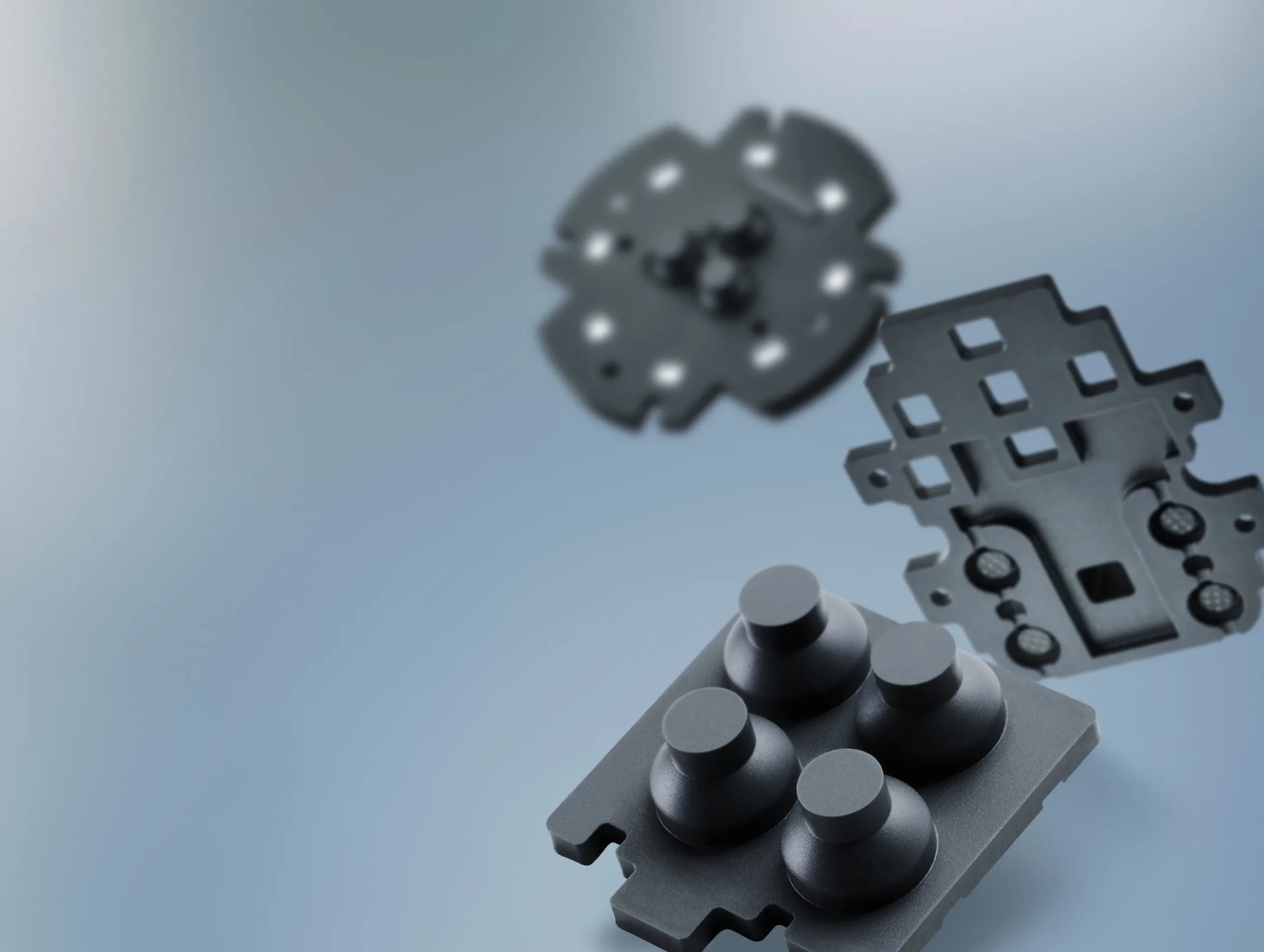
Custom Keypad systems
Silicone keypads
As a specialised silicone keypad manufacturer, Sateco develops custom Keypad systems for demanding industrial applications. A broad portfolio of silicone compounds, technologies, contacts and assemblies opens up almost unlimited possibilities for application-specific solutions. The silicone keypad is always at the heart of every solution as its functional basis.
At Sateco, Keypad systems are not created as standard products, but as precisely coordinated, end-to-end solutions. The starting point is always the silicone keypad: it defines haptics, acoustics, the actuation point and long-term stability.
What would you like us to develop together?
What is a keypad?
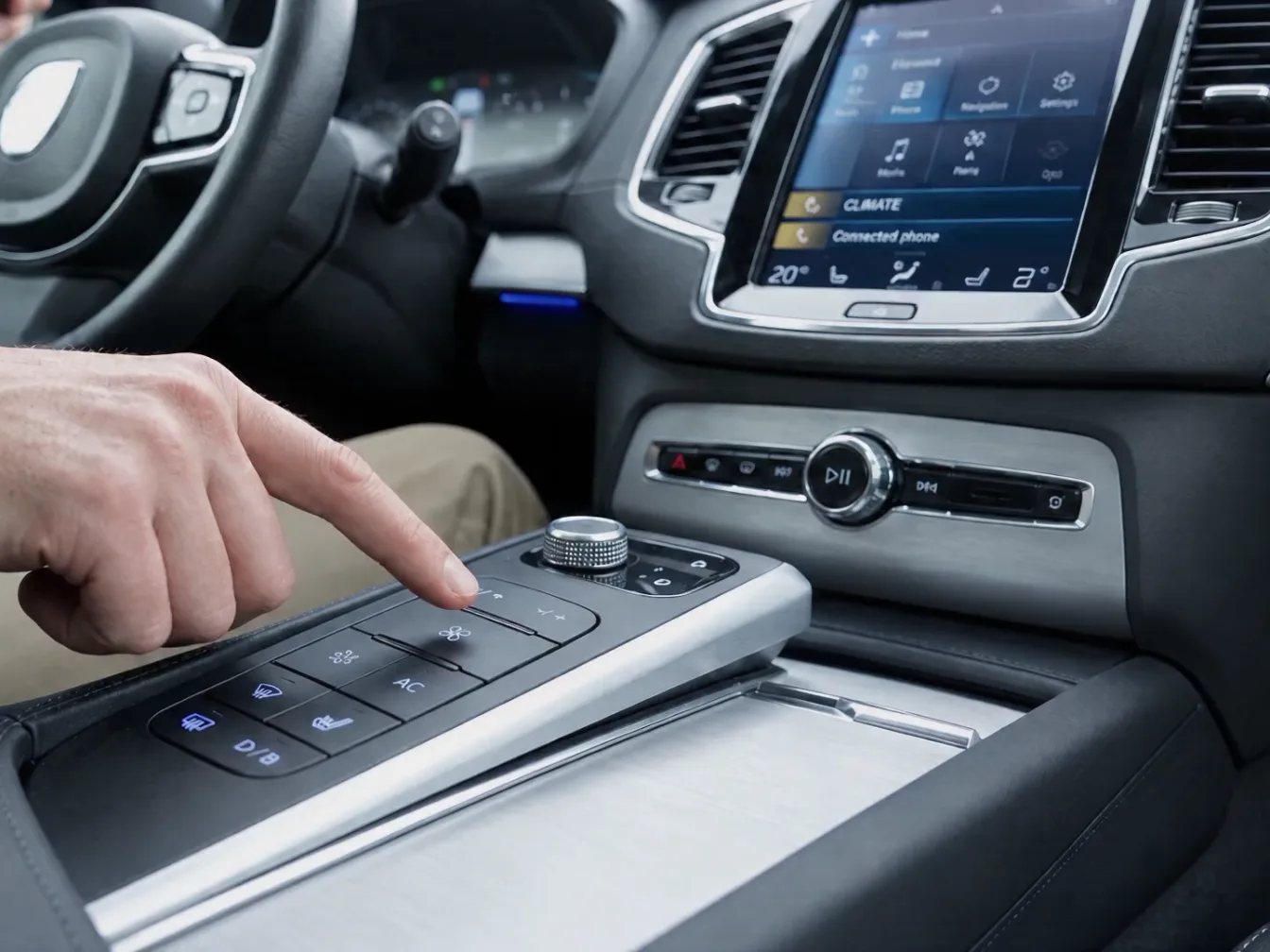
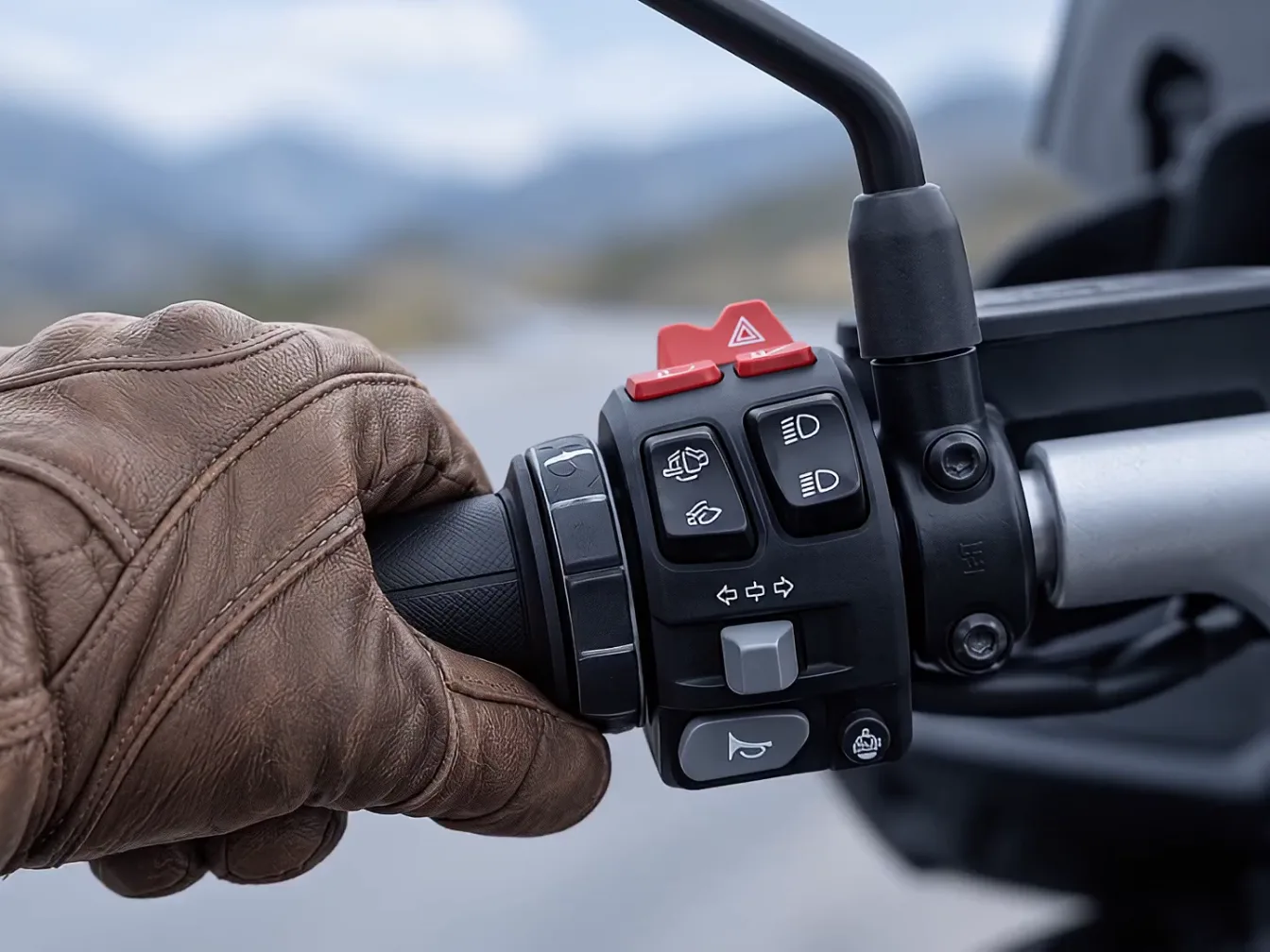
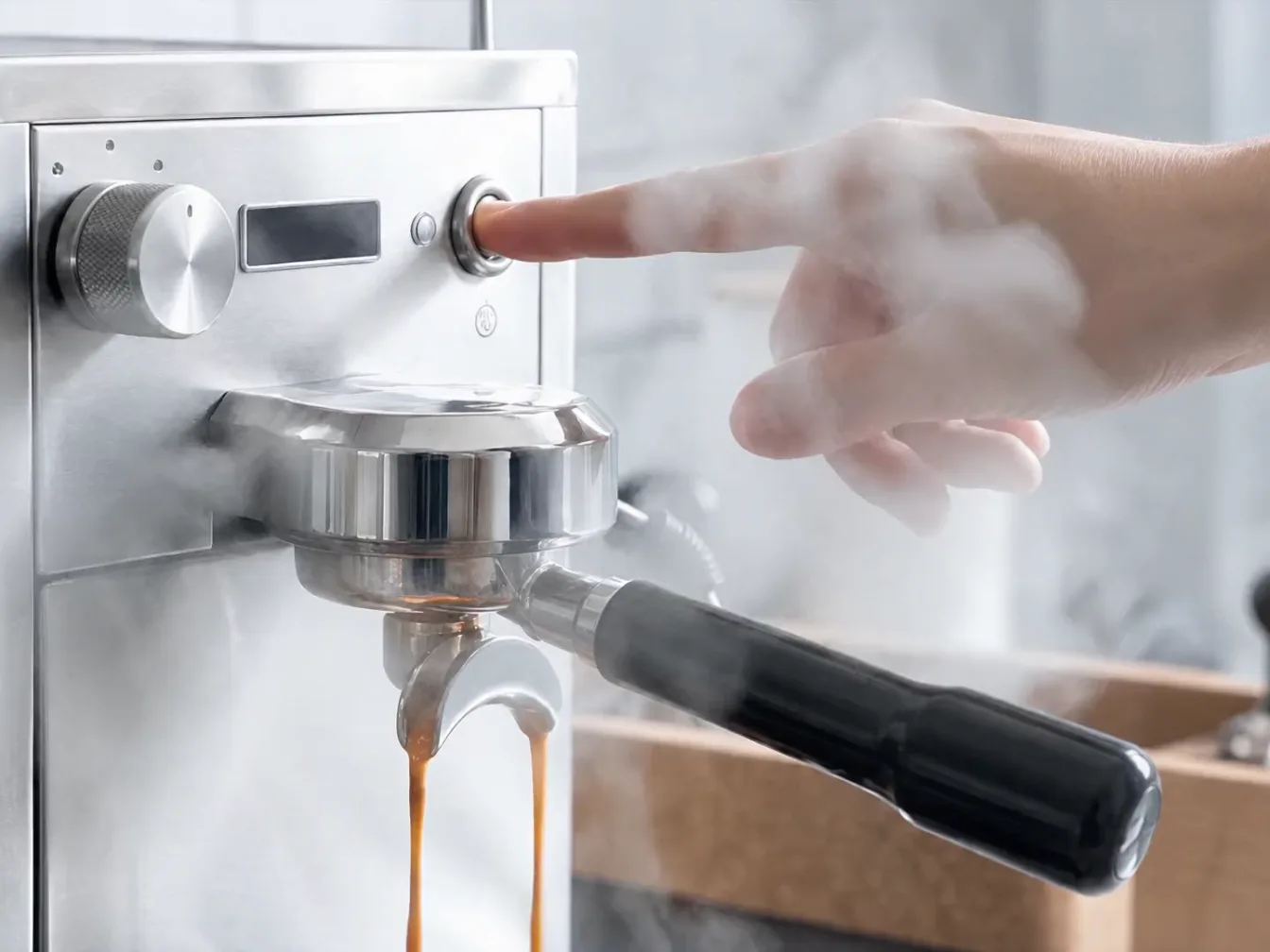
Whether power windows, cruise control, industrial control systems or coffee machines: control elements are part of our everyday lives. Silicone keypads are the core element that connects mechanics and electronics.
As elastic control elements, they perform two functions at the same time:
- mechanical actuation
- electrical contacting
At the same time, they shape the operating feel—from perceived quality and acoustics through to return characteristics.
As a silicone keypad manufacturer, we have the know-how, experience and technological portfolio to design every silicone keypad precisely to your requirements and integrate it into high-performance Keypad systems.
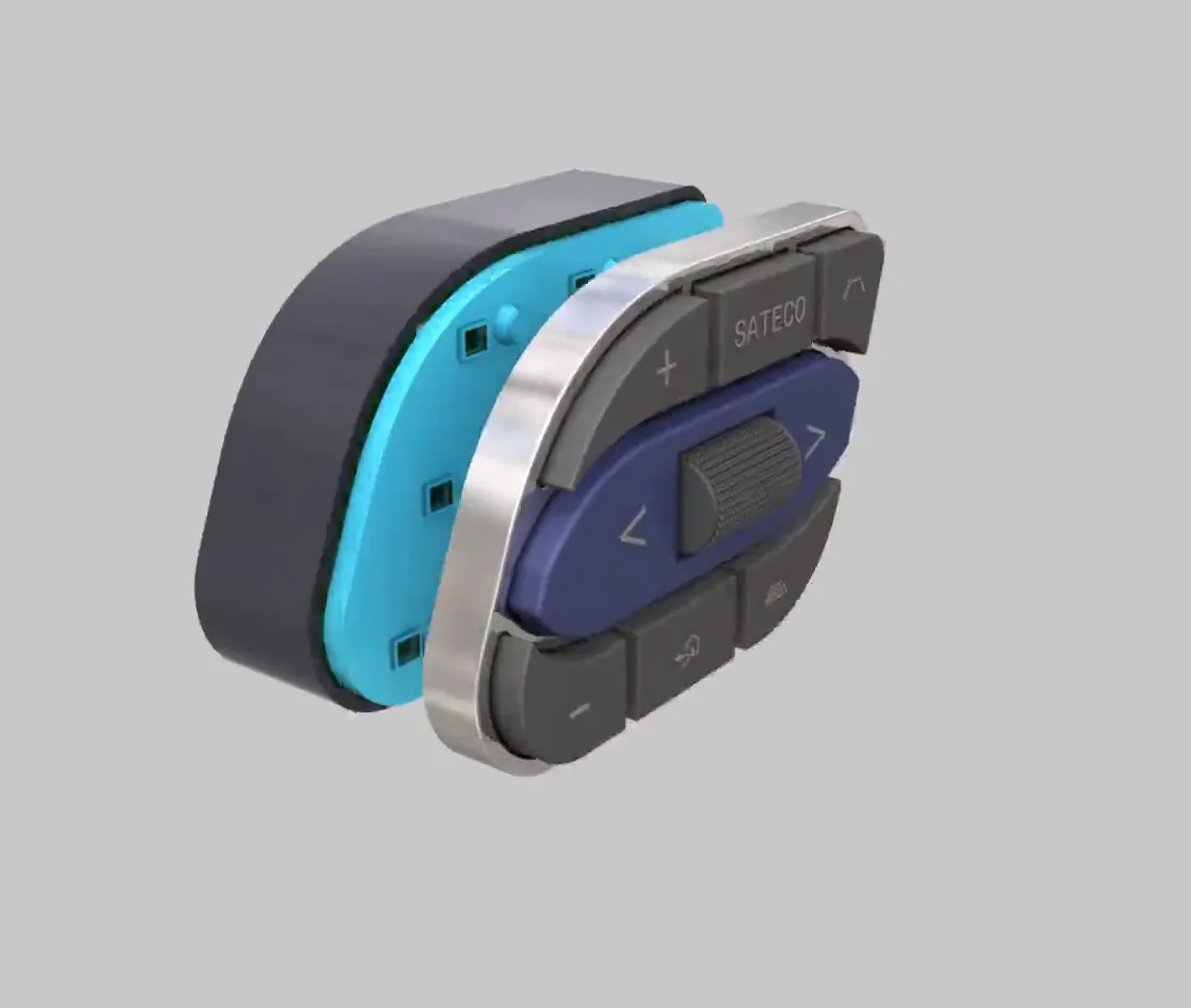
Silicone keypad manufacturer for industrial silicone solutions
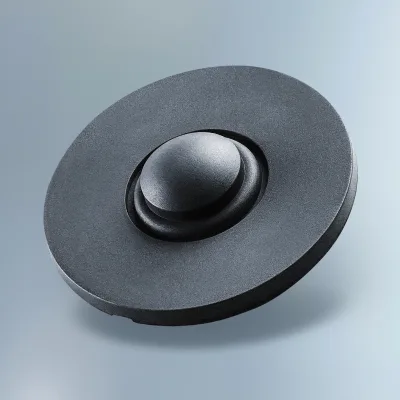
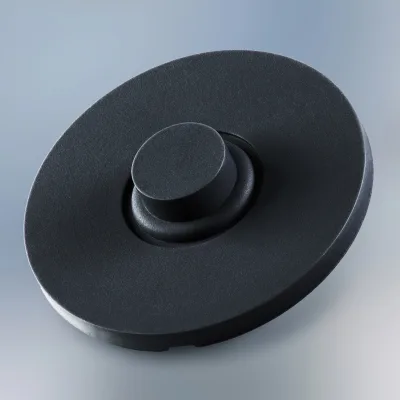
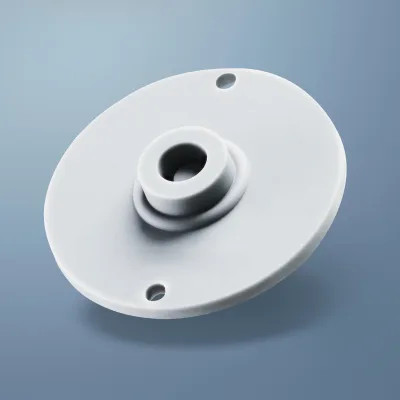
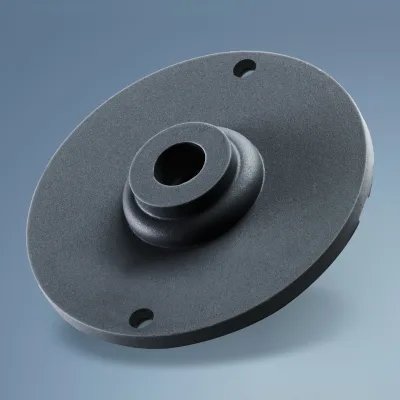
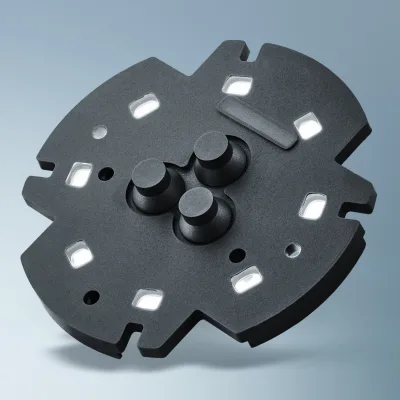
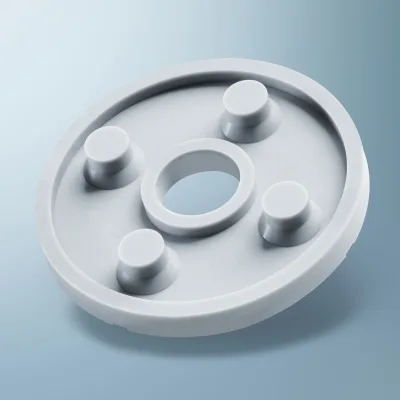
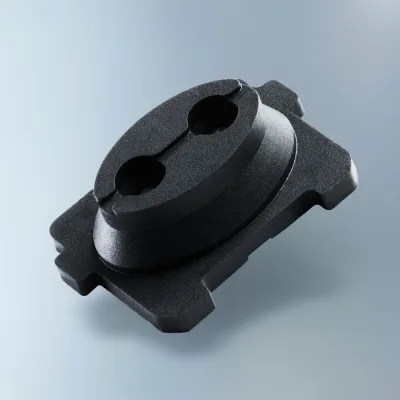
What sets Sateco silicone keypads apart
Advantages of Sateco as a silicone keypad manufacturer
At a glance:
- system development instead of individual components
- precisely defined haptics and acoustics profiles
- seamless integration of metal domes, contacts and lighting
- high design freedom with reproducible series quality
- very high process stability for volumes on an industrial scale
- many years of experience in regulated and demanding markets
Applications of silicone keypads across different industries
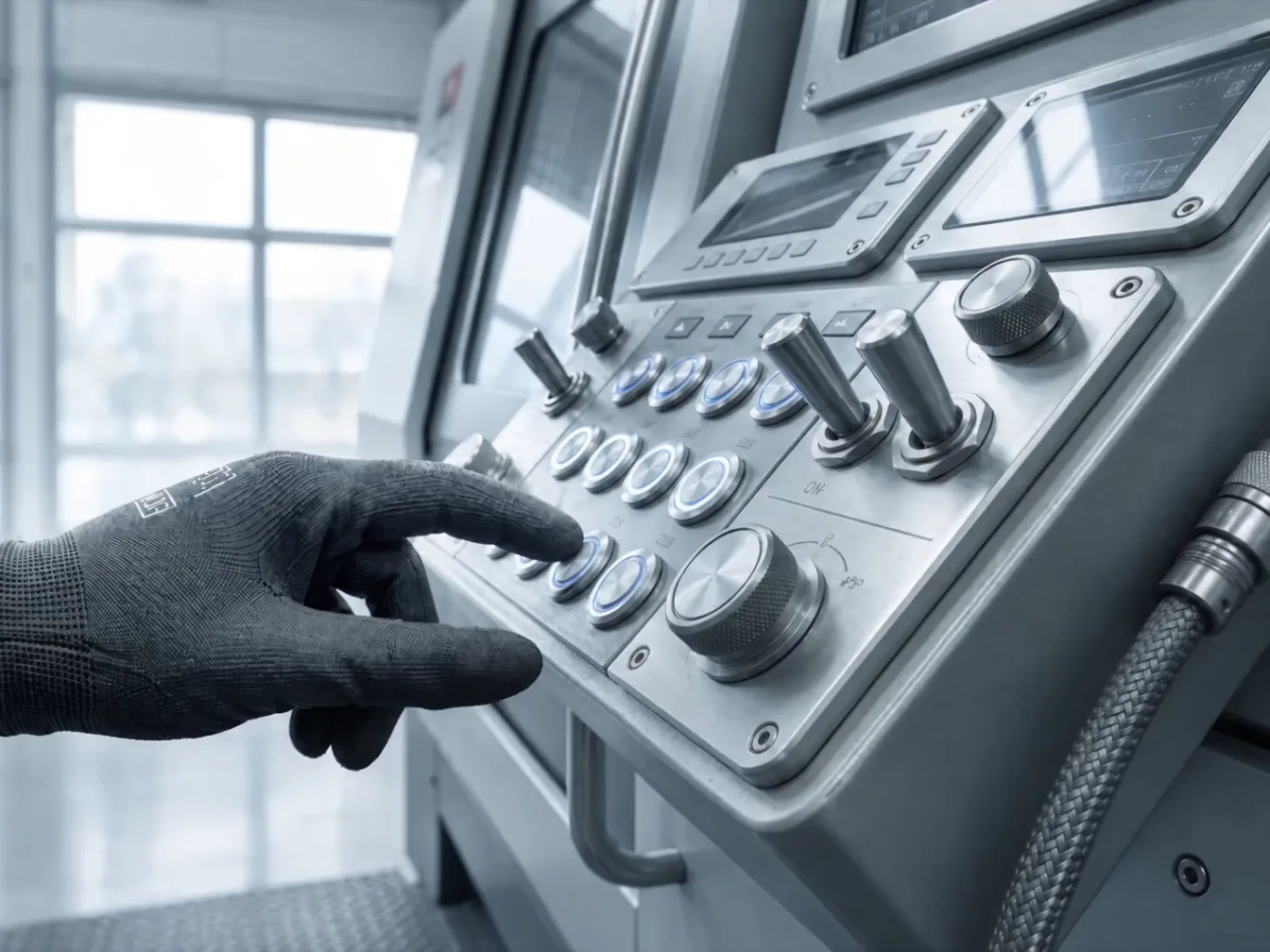
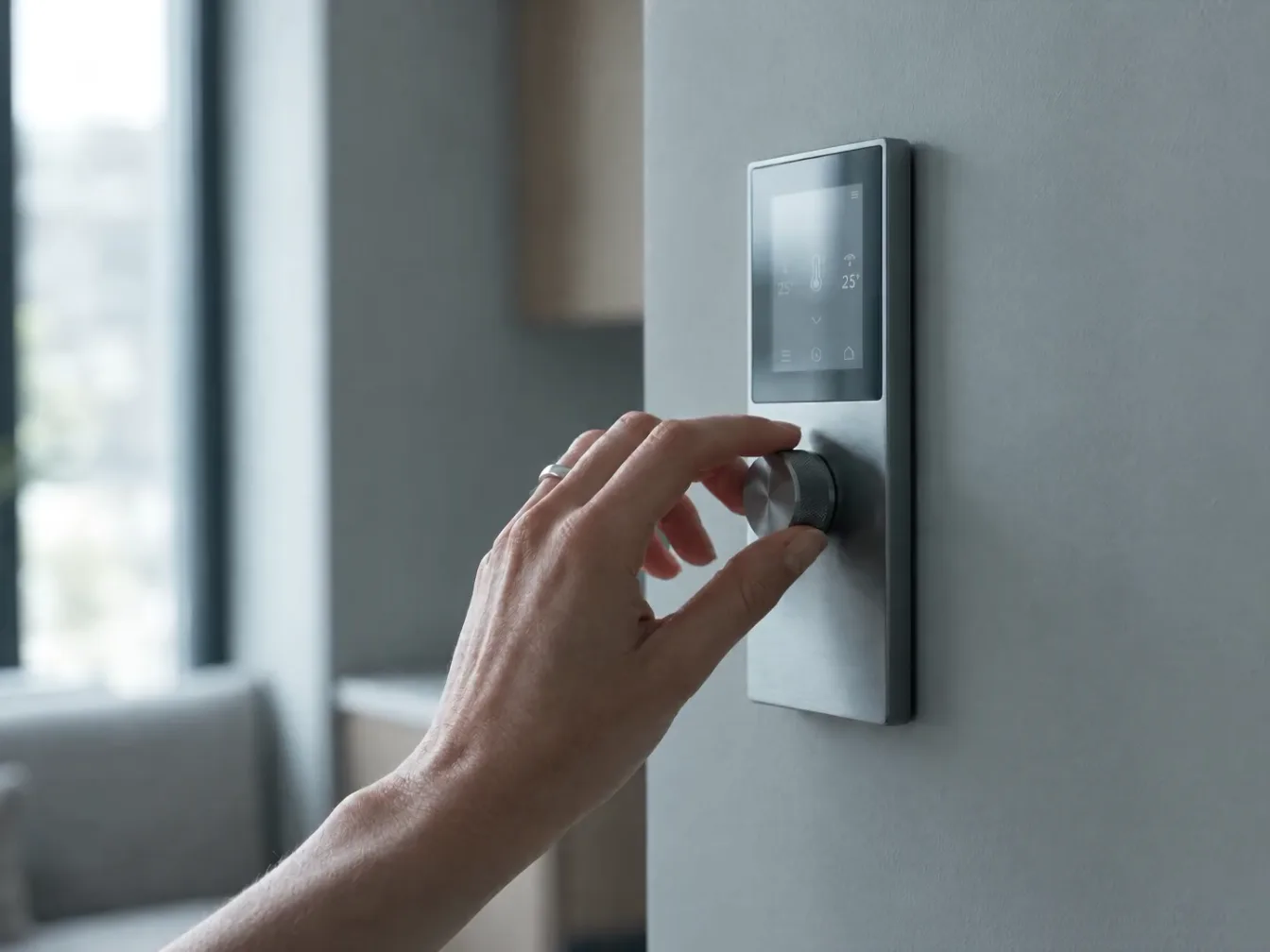
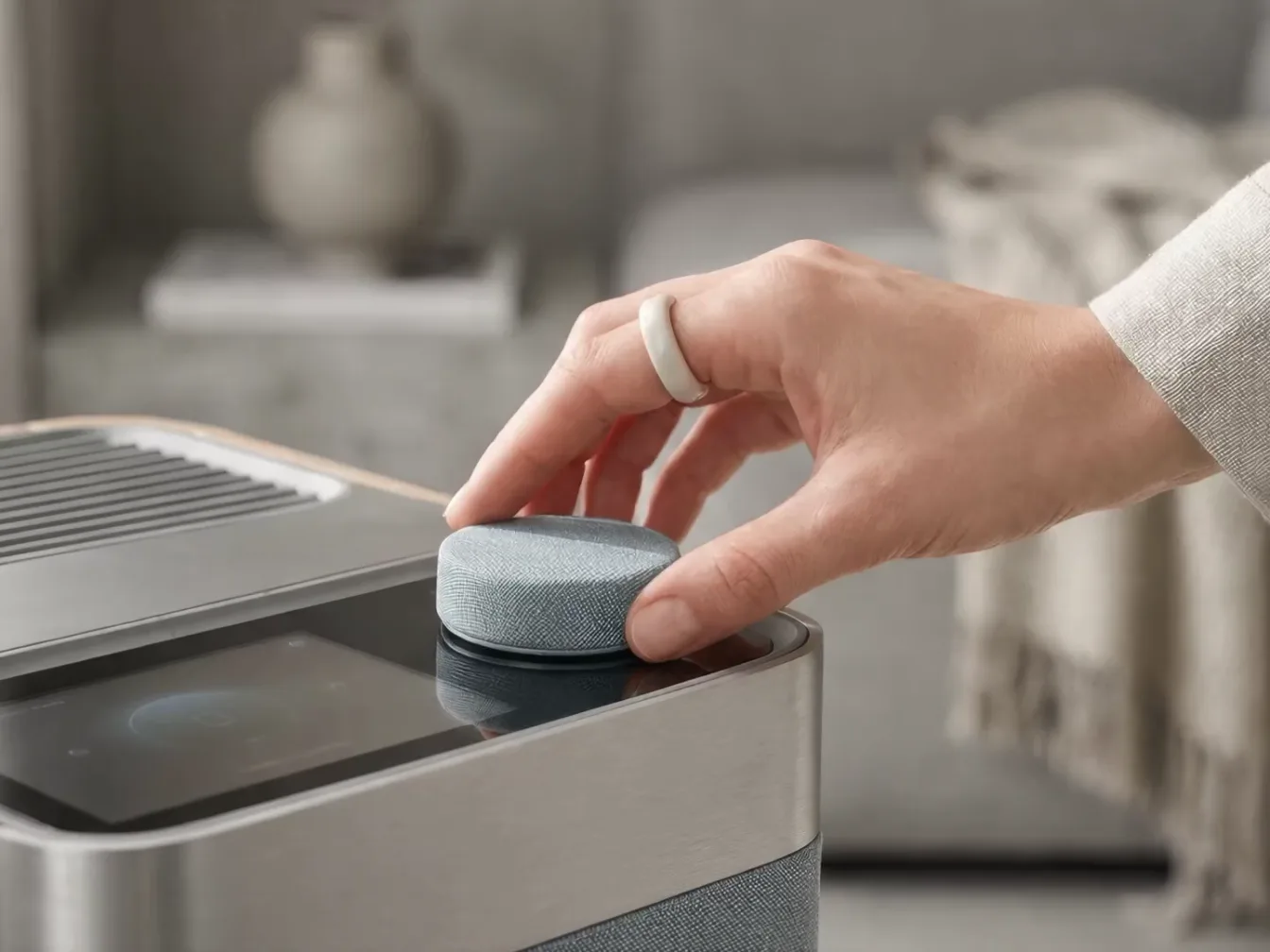
As a silicone keypad manufacturer with two production sites, Sateco produces solutions for functions that must trigger safely and reproducibly over many millions of switching cycles.
Sateco as a silicone keypad manufacturer with in-house development
At Sateco, Keypad systems are not created from a modular kit, but are developed from the specific application. Innovation and quality are firmly embedded in the corporate culture. As a silicone keypad manufacturer with its own Engineering Center, Sateco employs over 60 specialists in materials engineering, design, electronics and process engineering.
Even in early project phases, requirements for haptics, acoustics, lighting, electrical characteristics and environmental conditions are defined and incorporated into the system design. In-house test labs enable testing under realistic operating conditions. High vertical integration ensures that developed silicone keypads can be implemented reproducibly in series production and remain stable throughout the entire product life cycle.
Frequently asked questions.
Material
What is the base material for keypads?
Silicone. It is used due to its good haptic properties and resistance to ageing.
What temperature resistance does silicone have?
Generally up to 200°C (up to 300°C for short periods). Storage temperature: -60°C to +120°C. Operating temperature: -40°C to +85°C.
What is the service life (life cycles)?
Depending on the application and key pressure, between 20,000 and 1,000,000 cycles.
What insulation properties does the material have?
Insulation resistance: DIN 53482 at 250 V > 100 MΩ. Dielectric strength: DIN 53481 ~20 kV/mm.
Is silicone harmful to health?
When burned, it decomposes into neutral, non-conductive SiO2 powder. It does not melt/drip when burning and does not produce toxic fumes.
Can the colour/transparency be customised?
Yes. Colour according to RAL or Pantone or based on a customer sample. Translucency adjustable from crystal-clear to light-tight (for backlight). Can be printed using screen printing/pad printing.
What are the disadvantages of silicone?
A relatively expensive material, and there are no low-cost substitute materials with comparable properties.
What types of silicone are available and what is the difference?
3 Sateco grades: STC-SA (Standard Automotive), STC-MLLM (Medium Long Life), STC-SLL (Super Long Life). Differences in keyforce (1.0-2.5 N / 2.5-4.0 N / >4.0 N), life cycles (30-100k / 50-100k / >100k). Selection depends on requirements: SA for radio/navigation, MLLM for centre stack, SLL for steering wheel/power windows.
How do the silicone material grades differ?
Sateco develops its own silicone compounds with tight curing tolerances (pure, without fillers). Standard market silicones are often extended with fillers to reduce costs (material cost share -50%), which worsens long-term behaviour.
Production
What is vulcanisation?
Curing of the silicone at approx. 170°C for 5–7 min.
4 phases: material becomes viscous → start of crosslinking → crosslinking → end of vulcanisation. Important: vulcanisation that is too short reduces tactile stability.
How is the pre-material rolled?
Two rolling processes, thickness tolerance ±0.1 mm, then 24 h resting time → accurate material flow, consistent snap. Low-cost: only one rolling operation, thickness tolerance ±0.5 mm, inconsistent.
How long does the vulcanisation process take?
5–7 minutes per shot to ensure clean silicone flow. Low-cost: often only 2–4 minutes → inconsistent silicone flow, many non-degassed oligomers, long post-curing required.
What happens during post-curing?
2–4 hours at 200°C so that volatile oligomer components can escape → no risk of functional failure due to silicone outgassing. Low-cost suppliers often do not perform this step or only briefly → risk of electrical failure due to migration onto contact pills/tracks.
How reliably are contact pills inserted?
Sateco uses special fixtures → error rate virtually 0 ppm. In low-cost production, missing/duplicate pills are among the most common production defects.
Tooling
How is a compression tool designed?
Specially hardened steel with chrome/nickel coating. Upper/lower mould halves with overflow channels for precise tool closing and stable force/height tolerances. Pilot tool (1 cavity, flexible) vs. production tool (many cavities, more complex to modify).
How does tool modification work?
Depending on the change, “easy” or “difficult”:
- Increase force F1: easy (remove steel) / reduce: difficult (material would need to be added)
- Reduce stroke: easy / increase: difficult
- Increase key height: easy / reduce: difficult
- Change snap ratio: difficult (both tool halves affected)
- Remove hole/outer contour: easy with cutting block, otherwise difficult
Which tool steel is used?
Specially hardened steel—less distortion, more accurate machining. Low-cost: inexpensive standard carbon steels with larger machining tolerances.
How precise is the tool layout (nest spacing)?
Nest-to-nest spacing 10–15 mm, fewer nests, well-balanced tool. Low-cost: <10 mm spacing, usually no overflow channels, large variations in dimensions and forces.
What is the benefit of overflow channels in the tool?
Overfilling by up to 10% with silicone ensures clean tool closing and precise control of material flow → stable actuation forces in series production and accurate key height. Without an overflow channel: no precise tool closing, large variations, very different key heights.
Is the tool surface chrome-plated?
Precision chrome-plated → excellent release properties during demoulding, corrosion protection. Low-cost: usually no chrome plating → risk of damage/tearing during demoulding, no corrosion protection.
How is the tool EDM-machined?
3 processes (rough, semi-finish, finish) → surface quality Rt 8–10 microns. Low-cost: only 1 process (rough EDM) → Rt 12–14 microns, lower precision.
Contacting
What shapes of spring elements/domes are available?
Round or oval. Round is preferred (more consistent snap/force across all keys). Oval is more difficult to achieve consistently and requires more spacing from other elements.
What are sealing functions?
A keypad can cover several functions at the same time (haptics, sealing, backlighting), e.g. in metal-dome designs with a silicone membrane.
What types of pills/contact elements are available?
For keypads with contact pills (5 types): standard contact pill (STC-STD), low-resistance contact pill (STC-LR), gold contact pill (STC-GPR), nickel contact pill (STC-GPRN), printed contact pill (STC-PP).
For keypads with metal domes: round or square, made of stainless steel X10CrNi18-8, optionally gold- or nickel-plated.
What resistance values do the pill types have, and what does the PCB counterpart look like?
Contact resistance per contact pill type: standard ≤100 ohms (Ø3.0, special 2.0/2.5/3.5 mm), low-resistance ≤10 ohms (Ø3.0, special 2.5/3.5 mm), gold ≤1 ohm (Ø3.0), nickel ≤1 ohm (Ø3.0), printed ≤200 ohms (any size).
Metal domes: gold-plated/nickel-plated <1 ohm, uncoated <100 ohms.
PCB counterpart: recommended contact track width 0.5 mm (min. 0.3 mm), spacing between tracks 0.3 mm (max. 0.5 mm), track wider than spacing (A≥B). Recommended contact build-up: 32µCu + 2µNi + min. 0.1µAu.
Haptics & quality
What tolerances apply to silicone keypads?
Dimensional tolerance according to DIN ISO 3302-1 class M1.
Reason why tighter tolerances are not possible: silicone shrinkage (2.8–3.5%), hardness, vulcanisation time/temperature, position of the raw strip in the tool.
How are haptics defined?
Minimum parameters for defining a keypad: F1 (actuation force/peak force), S2 (travel to PCB contact), F3 (return force), snap (force drop F1–F2, haptic feedback in %).
Specific values according to the design guide:
- Keypads with silicone membranes: F1 tolerance ±15%, snap approx. 50±10% of F1, F3 approx. 25% below F2, S1 approx. 40–60% of S2
- Keypads with metal domes: F1 tolerance ±20%, snap square 45±15%/round 25±15% of F1, F3 >1.0 N, S1 ≈ S2
How do the materials behave in the service life test?
Sateco high-life grades (SLL) show stable force-travel curves even after 300,000 cycles. Standard market silicone showed a torn membrane in the test at 300,000 cycles.
What additional support/quality assurance does Sateco offer?
In-house lab tests keypad function (also in the switch), support from idea to finished product, global presence (Europe/USA/Asia), guarantee of flawless function.

Let us talk about silicone keypads.
We will be pleased to assist you quickly and competently. Contact us—we look forward to hearing from you!